Ever wondered why some companies thrive while others barely survive? The secret often lies in mastering the art of b2b business. It’s not just about selling—it’s about building relationships, solving real problems, and creating lasting value.






Understanding the Core of B2B Business

At its heart, a b2b business model revolves around one company selling products or services to another. Unlike B2C (business-to-consumer), where emotions and impulse often drive decisions, B2B transactions are rooted in logic, ROI, and long-term value. This fundamental difference shapes every aspect of strategy, from marketing to sales cycles.
What Defines a B2B Business?
A b2b business operates within a network of organizations that rely on each other to function efficiently. Whether it’s a software provider offering CRM tools to enterprises or a manufacturer supplying raw materials to another factory, the transaction is between businesses. These relationships are typically formalized with contracts, service-level agreements (SLAs), and multi-tiered decision-making processes.
- Transactions are based on need, not impulse.
- Buyers are often teams, not individuals.
- Sales cycles are longer and more complex.
According to Investopedia, B2B markets account for significantly larger transaction volumes than B2C, simply because businesses purchase in bulk and require ongoing support.
Key Differences Between B2B and B2C
While both models aim to generate revenue, the approach couldn’t be more different. In a b2b business, the customer is usually a professional buyer or procurement team evaluating solutions based on efficiency, cost savings, and integration capabilities. In contrast, B2C targets individual consumers influenced by branding, emotions, and lifestyle appeal.
- B2B: Rational, data-driven, relationship-focused.
- B2C: Emotional, brand-driven, convenience-focused.
- B2B sales involve multiple stakeholders; B2C often involves a single decision-maker.
“In B2B, you’re not just selling a product—you’re selling peace of mind, scalability, and a competitive edge.” — Sales Strategist, Linda Richardson
Why B2B Business Models Dominate Global Trade
The backbone of the global economy isn’t consumer spending—it’s the invisible network of b2b business interactions that keep supply chains moving, factories running, and innovation alive. From cloud computing services to industrial machinery, most economic activity starts with a B2B transaction.
Scale and Revenue Potential
One of the biggest advantages of a b2b business is the potential for high-value contracts. A single enterprise client can generate millions in revenue over a multi-year agreement. For example, Salesforce, a leader in B2B SaaS, reported over $31 billion in revenue in 2023, primarily from long-term enterprise contracts.
- Enterprise deals often include customization, support, and training.
- Recurring revenue models (like subscriptions) ensure predictable income.
- Upselling and cross-selling opportunities are abundant.
As highlighted by Statista, the global B2B e-commerce market is projected to reach $20.9 trillion by 2027, far surpassing B2C e-commerce in total value.
Long-Term Customer Relationships
In a b2b business, customer retention is often more valuable than acquisition. Once a company integrates your software or relies on your supply chain, switching costs become prohibitively high. This creates a natural moat around your business.
- Long contracts ensure revenue stability.
- Ongoing support builds trust and dependency.
- Feedback loops lead to product improvement and innovation.
Companies like IBM and Siemens have maintained decades-long relationships with clients by continuously evolving their offerings to meet changing business needs.
Essential Components of a Successful B2B Business
Running a thriving b2b business isn’t just about having a great product. It’s about aligning every component—from value proposition to customer success—to meet the unique demands of business clients.
Clear Value Proposition
In the world of b2b business, your value proposition must answer one critical question: “What problem do you solve, and how much money or time will you save?” Vague promises won’t cut it. Decision-makers need concrete metrics.
- Focus on ROI, efficiency gains, or risk reduction.
- Use case studies and benchmarks to prove claims.
- Speak the language of the industry (e.g., “reduce downtime by 40%”).
For instance, Slack’s early success in the b2b business space came from clearly positioning itself as a tool that could reduce internal email traffic by 47%, a tangible benefit for large organizations.
Targeted Market Segmentation
Not all businesses are your customers. A successful b2b business identifies specific niches—by industry, company size, or geographic region—and tailors its messaging accordingly. Trying to be everything to everyone leads to diluted impact.
- Segment by pain points: manufacturing vs. healthcare have different needs.
- Use firmographics (company size, revenue, location) to refine targeting.
- Leverage intent data to identify companies actively seeking solutions.
HubSpot, for example, segments its b2b business offerings into tiers for startups, mid-market, and enterprise, each with tailored features and pricing.
Building a High-Performance B2B Sales Funnel
The b2b business sales funnel is longer and more complex than its B2C counterpart. It involves nurturing leads through multiple touchpoints, educating prospects, and guiding them through a consensus-driven decision process.
Lead Generation Strategies
Generating qualified leads is the lifeblood of any b2b business. Unlike B2C, where ads can drive instant purchases, B2B lead gen relies on trust-building and authority.
- Content marketing: whitepapers, webinars, and case studies.
- LinkedIn outreach and account-based marketing (ABM).
- SEO-optimized blogs targeting industry-specific keywords.
According to Gartner, companies that use ABM see 200% higher sales win rates compared to traditional outreach.
Nurturing and Conversion
Once leads are in the funnel, the focus shifts to education and trust. Decision-makers need to justify their choice to stakeholders, so your content must arm them with data, testimonials, and risk mitigation strategies.
- Drip email campaigns with industry insights.
- Personalized demos and proof-of-concept trials.
- Customer advisory boards for co-creation.
“The best B2B salespeople don’t sell—they consult.” — Marketing Expert, Seth Godin
Digital Marketing for B2B Business Success
Gone are the days when b2b business relied solely on trade shows and cold calls. Today, digital marketing is the engine that drives awareness, engagement, and conversion.
Content Marketing That Converts
In a b2b business, content isn’t about entertainment—it’s about authority. High-quality, educational content positions your brand as a thought leader and helps prospects at every stage of the buyer’s journey.
- Top of funnel: Industry reports and trend analyses.
- Middle of funnel: Comparison guides and product deep dives.
- Bottom of funnel: Case studies and ROI calculators.
For example, Adobe’s B2B content strategy includes detailed guides on digital transformation, helping enterprise clients understand how their tools fit into broader business strategies.
SEO and Paid Advertising Synergy
While organic search builds long-term credibility, paid ads accelerate visibility. A balanced approach ensures your b2b business appears where decision-makers are searching.
- Target high-intent keywords like “best CRM for mid-sized companies.”
- Use Google Ads with LinkedIn retargeting for precision.
- Optimize landing pages for lead capture, not just clicks.
As noted by Backlinko, B2B websites that rank in the top 3 for target keywords generate up to 3x more leads than those on page two.
Technology and Automation in B2B Business
Modern b2b business operations are powered by technology. From CRM systems to AI-driven analytics, automation is no longer optional—it’s essential for scaling efficiently.
CRM and Sales Enablement Tools
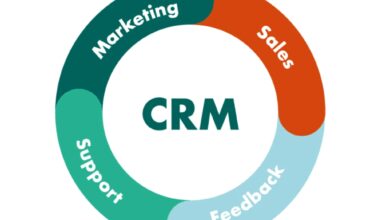
A robust Customer Relationship Management (CRM) system is the central nervous system of a b2b business. It tracks interactions, manages pipelines, and provides insights into customer behavior.
- Salesforce, HubSpot, and Zoho are leading CRM platforms.
- Integration with email, calendar, and support tools streamlines workflows.
- AI-powered insights predict churn and upsell opportunities.
According to Salesforce’s State of Sales Report, high-performing sales teams are 2.3x more likely to use AI in their CRM.
Marketing Automation Platforms
Manual follow-ups don’t scale in a b2b business. Marketing automation tools like Marketo, Pardot, and ActiveCampaign allow you to deliver personalized content at scale.
- Automated email sequences nurture leads over time.
- Lead scoring identifies the most sales-ready prospects.
- Behavioral tracking adjusts messaging based on engagement.
These platforms reduce response times and increase conversion rates by ensuring no lead falls through the cracks.
Measuring Success in B2B Business
What gets measured gets managed. In a b2b business, tracking the right KPIs is crucial for growth, optimization, and investor confidence.
Key Performance Indicators (KPIs)
Not all metrics are created equal. Focus on those that reflect real business health and growth potential.
- Customer Acquisition Cost (CAC): How much it costs to win a new client.
- Customer Lifetime Value (CLTV): Total revenue expected from a client.
- Churn Rate: Percentage of clients lost over time.
A healthy b2b business typically has a CLTV:CAC ratio of 3:1 or higher, indicating sustainable growth.
Customer Satisfaction and Retention
Happy clients are repeat clients. In b2b business, retention is often more profitable than acquisition.
- Net Promoter Score (NPS) measures loyalty.
- Customer Effort Score (CES) evaluates ease of doing business.
- Regular check-ins and success planning prevent churn.
Companies like ZoomInfo attribute their high retention rates to proactive customer success teams that anticipate needs before they arise.
Future Trends Shaping the B2B Business Landscape
The b2b business world is evolving rapidly. Staying ahead requires anticipating trends and adapting quickly.
Rise of AI and Predictive Analytics
Artificial Intelligence is transforming how b2b businesses operate. From chatbots handling initial inquiries to predictive analytics forecasting sales trends, AI is becoming indispensable.
- AI-driven personalization enhances customer experience.
- Predictive lead scoring improves sales efficiency.
- Automated reporting saves time and reduces errors.
As per McKinsey, AI adoption in B2B sales could increase profitability by up to 60% by 2025.
Sustainability and Ethical Sourcing
Modern b2b business clients increasingly demand ethical practices. Sustainability isn’t just a PR move—it’s a competitive advantage.
- Green supply chains reduce environmental impact.
- Transparency in sourcing builds trust.
- ESG (Environmental, Social, Governance) compliance attracts investors.
Companies like Unilever have integrated sustainable sourcing into their B2B partnerships, setting industry benchmarks.
What is the main difference between B2B and B2C businesses?
The main difference lies in the customer and decision-making process. B2B businesses sell to other companies, involving longer sales cycles, multiple stakeholders, and a focus on ROI and efficiency. B2C targets individual consumers with shorter, emotion-driven purchases.
How long is the average B2B sales cycle?
The average B2B sales cycle ranges from 1 to 6 months, depending on the industry and deal complexity. High-value SaaS or enterprise software deals can take over a year due to procurement processes and contract negotiations.
What are the most effective lead generation tactics for B2B?
Top tactics include content marketing (whitepapers, webinars), LinkedIn outreach, account-based marketing (ABM), SEO, and email nurturing campaigns. Combining these with data-driven targeting yields the best results.
Why is customer retention crucial in B2B business?
Customer retention is crucial because acquiring a new B2B client can cost 5 to 25 times more than retaining an existing one. Long-term contracts and upselling opportunities make loyal clients a primary source of stable revenue.
How is AI impacting B2B business operations?
AI is revolutionizing B2B by automating repetitive tasks, enhancing lead scoring, personalizing marketing, and predicting customer behavior. It enables faster decision-making and improves efficiency across sales, marketing, and support teams.
Mastering the b2b business landscape requires more than just a great product—it demands strategic thinking, relationship-building, and a deep understanding of business needs. From crafting a compelling value proposition to leveraging AI and automation, every element must align to deliver measurable value. As global trade evolves, the companies that prioritize customer success, innovation, and ethical practices will lead the next wave of growth. Whether you’re launching a startup or scaling an enterprise, the principles of effective b2b business remain clear: solve real problems, build trust, and focus on long-term value.
Further Reading: