Ever wondered how businesses sell to other businesses? B2B companies drive the backbone of global commerce, operating behind the scenes with powerful strategies that fuel industries. Let’s dive into what makes them tick—and how they thrive.






What Are B2B Companies and How Do They Work?

B2B companies, or business-to-business firms, sell products or services to other businesses rather than individual consumers. Unlike B2C (business-to-consumer) models, B2B transactions involve longer sales cycles, higher order values, and complex decision-making units. These companies form the foundation of supply chains, technology infrastructure, and enterprise solutions.
The Core Definition of B2B Companies
At its essence, a B2B company provides goods or services that help another business operate, grow, or deliver value. This could range from raw materials for manufacturing to cloud software for HR management. The key differentiator is that the customer is not an end-user but another organization.
- Examples include Salesforce (CRM software for businesses), Intel (chip supplier to device manufacturers), and FedEx (logistics for enterprises).
- Transactions are typically contract-based, recurring, and involve negotiations over pricing, volume, and service level agreements (SLAs).
- Decision-making often involves multiple stakeholders—procurement, finance, IT, and executive leadership.
How B2B Differs from B2C
While both models aim to generate revenue, the mechanics of B2B and B2C are fundamentally different. B2B sales rely on logic, ROI calculations, and long-term partnerships, whereas B2C often appeals to emotion, convenience, and instant gratification.
- Sales cycles in B2B can last months or even years, compared to minutes or hours in B2C.
- Marketing in B2B focuses on thought leadership, case studies, and whitepapers, while B2C leans on ads, influencers, and emotional branding.
- Customer relationships in B2B are deeply personalized and account-managed, whereas B2C often uses automation and mass targeting.
“B2B is not just about selling—it’s about solving business problems with scalable solutions.” — Harvard Business Review
Types of B2B Companies and Their Business Models
B2B companies operate across various sectors and adopt different models based on their value proposition, industry, and customer needs. Understanding these types helps in crafting effective marketing, sales, and product strategies.
Manufacturers and Wholesalers
These are the backbone of physical product distribution. Manufacturers produce goods in bulk and sell them to distributors, retailers, or other manufacturers. Wholesalers act as intermediaries, buying in volume and reselling to smaller businesses.
- Example: 3M supplies industrial adhesives and safety gear to construction and manufacturing firms.
- Revenue model: High volume, low margin; relies on economies of scale.
- Key challenge: Managing supply chain logistics and inventory forecasting.
Software-as-a-Service (SaaS) Providers
SaaS has revolutionized the B2B landscape. These companies offer cloud-based software solutions on a subscription model, enabling businesses to access powerful tools without heavy upfront investment.
- Examples: HubSpot (marketing automation), ZoomInfo (sales intelligence), and Slack (team collaboration).
- Revenue model: Recurring subscriptions (monthly or annual), often with tiered pricing.
- Key advantage: Scalability, remote access, and continuous updates.
According to Gartner, the global SaaS market is projected to exceed $232 billion by 2024, highlighting the explosive growth of B2B SaaS companies.
Professional Services Firms
These B2B companies offer expertise rather than products. They include consulting agencies, legal firms, accounting services, and marketing agencies that help other businesses improve operations, compliance, or growth.
- Example: McKinsey & Company advises Fortune 500 firms on strategy and transformation.
- Revenue model: Hourly billing, project-based fees, or retainer contracts.
- Success factor: Trust, reputation, and demonstrable results.
The Evolution of B2B Companies in the Digital Age
The digital revolution has transformed how B2B companies operate, market, and sell. What was once a relationship-driven, offline process is now increasingly digital, data-driven, and customer-centric.
From Offline to Online: The Digital Shift
Historically, B2B sales relied on trade shows, cold calls, and face-to-face meetings. Today, over 70% of B2B buyers begin their journey online, researching solutions before ever speaking to a sales rep.
- Company websites, SEO, and content marketing are now critical touchpoints.
- E-commerce platforms for B2B, like Alibaba and ThomasNet, enable direct procurement online.
- Digital catalogs and configurators allow buyers to customize products and place orders instantly.
The Rise of Data-Driven Decision Making
B2B companies now leverage analytics to understand customer behavior, optimize pricing, and forecast demand. Tools like CRM systems, marketing automation, and AI-powered insights are standard.
- Sales teams use predictive analytics to identify high-potential leads.
- Marketing uses A/B testing and customer segmentation to personalize campaigns.
- Operations rely on real-time data to manage inventory and delivery timelines.
“Data is the new oil in B2B—those who harness it effectively gain a decisive competitive edge.” — Forbes
Key Challenges Facing B2B Companies Today
Despite their critical role in the economy, B2B companies face unique challenges that can hinder growth, innovation, and customer retention.
Long and Complex Sales Cycles
One of the biggest hurdles is the extended time it takes to close a deal. Multiple stakeholders, budget approvals, legal reviews, and technical evaluations slow down the process.
- Solution: Implement a structured sales funnel with clear milestones and content for each stage.
- Use sales enablement tools like Gong or Chorus to analyze calls and improve pitch effectiveness.
- Offer free trials or proof-of-concept (POC) to reduce perceived risk.
Customer Retention and Churn Management
Acquiring a new B2B customer can cost five to seven times more than retaining an existing one. Yet, many companies focus too much on acquisition and neglect retention.
- Implement customer success programs to ensure clients achieve their desired outcomes.
- Use Net Promoter Score (NPS) and Customer Satisfaction (CSAT) surveys to measure loyalty.
- Offer upsell and cross-sell opportunities based on usage patterns.
Competition and Market Saturation
As more players enter the B2B space—especially in tech and SaaS—differentiation becomes harder. Companies must clearly articulate their unique value proposition (UVP).
- Focus on niche markets or vertical-specific solutions.
- Build thought leadership through blogs, webinars, and industry reports.
- Leverage customer testimonials and case studies to build credibility.
Innovative Marketing Strategies for B2B Companies
Traditional advertising doesn’t work in B2B. Instead, companies must adopt strategies that build trust, demonstrate expertise, and guide buyers through a complex decision process.
Content Marketing That Converts
High-quality content is the cornerstone of B2B marketing. It educates, nurtures leads, and positions the company as an industry leader.
- Create in-depth guides, whitepapers, and research reports that address pain points.
- Use SEO to rank for high-intent keywords like “best CRM for small businesses” or “supply chain optimization tools.”
- Promote content through LinkedIn, email newsletters, and industry forums.
A study by Content Marketing Institute found that 91% of B2B marketers use content marketing to reach customers, with 60% citing it as their most effective strategy.
Leveraging LinkedIn for B2B Lead Generation
LinkedIn is the most powerful platform for B2B outreach. It allows companies to connect with decision-makers, share insights, and run targeted ad campaigns.
- Optimize company pages with clear value propositions and customer success stories.
- Encourage executives and sales teams to engage with content and participate in groups.
- Use LinkedIn Ads to target by job title, industry, company size, and seniority.
Account-Based Marketing (ABM)
ABM is a strategic approach where marketing and sales teams collaborate to target high-value accounts with personalized campaigns.
- Identify key accounts based on revenue potential and strategic fit.
- Create custom content, emails, and even direct mail tailored to each account.
- Measure success by engagement, pipeline velocity, and deal closure.
“ABM flips the funnel: instead of casting a wide net, you fish with precision.” — Demandbase
Sales Strategies That Drive B2B Success
Selling to businesses requires a consultative, value-driven approach. The most successful B2B companies align their sales strategies with customer needs and buying behaviors.
Consultative Selling Techniques
This approach focuses on understanding the customer’s business challenges before proposing a solution.
- Ask open-ended questions to uncover pain points and goals.
- Position your product as a strategic enabler, not just a feature set.
- Use ROI calculators and business case templates to quantify value.
The Role of CRM in B2B Sales
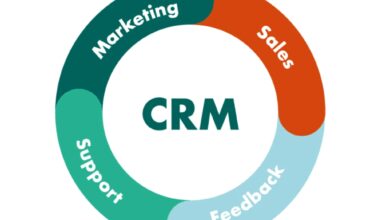
Customer Relationship Management (CRM) systems like Salesforce, HubSpot, and Zoho are essential for managing leads, tracking interactions, and forecasting revenue.
- Centralize customer data for better visibility across teams.
- Automate follow-ups and task reminders to improve sales efficiency.
- Integrate with marketing and support tools for a unified customer view.
Building Long-Term Customer Relationships
In B2B, the sale is just the beginning. Long-term success depends on ongoing engagement and value delivery.
- Assign customer success managers to onboard and support clients.
- Host regular business reviews to assess performance and identify growth opportunities.
- Create user communities and training programs to increase product adoption.
Technology and Tools Powering Modern B2B Companies
Technology is no longer optional—it’s the engine of growth for B2B companies. From automation to AI, the right tools can streamline operations and enhance customer experiences.
Marketing Automation Platforms
Tools like Marketo, Pardot, and HubSpot automate repetitive tasks such as email campaigns, lead scoring, and social media posting.
- Nurture leads with personalized drip campaigns based on behavior.
- Track campaign performance and optimize for conversion.
- Integrate with CRM for seamless data flow.
AI and Machine Learning in B2B
AI is transforming how B2B companies predict demand, personalize content, and support customers.
- Chatbots handle initial inquiries and route complex issues to human agents.
- Predictive analytics forecast which leads are most likely to convert.
- AI-powered content tools generate blog drafts, subject lines, and ad copy.
According to a report by McKinsey, 55% of B2B companies are now using AI in at least one business function, with marketing and sales being the top adopters.
Integration and API Ecosystems
B2B companies increasingly rely on integrations to deliver seamless experiences. APIs allow software platforms to connect and share data.
- Example: A CRM integrating with an email platform and calendar tool.
- Benefits: Reduced manual work, improved data accuracy, and enhanced user experience.
- Best practice: Offer open APIs and developer documentation to encourage third-party integrations.
Future Trends Shaping B2B Companies
The B2B landscape is evolving rapidly. Companies that anticipate and adapt to emerging trends will gain a significant advantage.
The Shift to Subscription and Usage-Based Pricing
More B2B companies are moving away from one-time sales to recurring revenue models.
- Subscription models provide predictable income and stronger customer relationships.
- Usage-based pricing (e.g., pay-per-API-call) aligns cost with value.
- Examples: AWS, Snowflake, and Twilio have popularized this model.
Sustainability and Ethical Sourcing
B2B buyers are increasingly prioritizing sustainability. Companies must demonstrate environmental responsibility and ethical practices.
- Adopt green manufacturing, reduce carbon footprint, and use recyclable packaging.
- Obtain certifications like ISO 14001 or B Corp to build trust.
- Highlight sustainability in marketing and RFP responses.
Globalization and Remote Collaboration
Digital tools have made it easier for B2B companies to operate globally. Remote teams, virtual sales meetings, and cloud platforms enable cross-border collaboration.
- Expand into new markets with localized websites and support.
- Use video conferencing and collaboration tools like Zoom and Notion.
- Adapt to regional regulations and cultural nuances in communication.
Case Studies: Successful B2B Companies and What We Can Learn
Real-world examples provide valuable insights into what works—and what doesn’t—in the B2B space.
Salesforce: Dominating the CRM Market
Salesforce revolutionized B2B software with its cloud-based CRM platform. By focusing on ease of use, scalability, and a robust ecosystem, it became the market leader.
- Key takeaway: Invest in a strong partner network and developer community.
- Lesson: Continuous innovation and customer-centric updates keep users engaged.
- Result: Over 150,000 customers and $31 billion in annual revenue (2023).
Shopify Plus: Empowering Enterprise Retailers
While Shopify started as a B2C platform, Shopify Plus targets large businesses with advanced features and dedicated support.
- Key takeaway: Expand into B2B by offering enterprise-grade solutions.
- Lesson: Personalized onboarding and 24/7 support build trust with big clients.
- Result: Clients like Heinz, Gymshark, and Staples now use Shopify Plus.
ServiceNow: Streamlining Enterprise Workflows
ServiceNow provides digital workflow automation for IT, HR, and customer service. Its platform reduces manual work and improves efficiency.
- Key takeaway: Solve complex, high-friction processes with intuitive software.
- Lesson: Focus on integration capabilities to fit into existing tech stacks.
- Result: Over $7 billion in annual revenue and a 98% customer retention rate.
What makes a B2B company successful?
A successful B2B company combines a clear value proposition, deep customer understanding, efficient sales processes, and scalable technology. It focuses on long-term relationships, continuous innovation, and measurable ROI for its clients.
How do B2B companies generate leads?
B2B companies generate leads through content marketing, SEO, LinkedIn outreach, webinars, trade shows, and account-based marketing. They often use gated content (like whitepapers) to capture contact information and nurture prospects through the sales funnel.
What is the average sales cycle for B2B companies?
The average B2B sales cycle ranges from 1 to 6 months, depending on the industry and deal complexity. For enterprise SaaS solutions, it can extend to 12 months or more due to procurement processes and stakeholder alignment.
Why is customer success important in B2B?
Customer success ensures clients achieve their desired outcomes, leading to renewals, upsells, and referrals. In subscription-based models, it directly impacts churn and lifetime value, making it a critical function in modern B2B companies.
How can B2B companies improve their marketing ROI?
By focusing on high-intent channels like SEO and LinkedIn, personalizing content, using marketing automation, and aligning sales and marketing teams through shared KPIs, B2B companies can significantly improve marketing ROI.
B2B companies are the unsung heroes of the global economy, enabling innovation, efficiency, and growth across industries. From manufacturers to SaaS giants, they thrive by solving real business problems with strategic solutions. The future belongs to those who embrace digital transformation, prioritize customer success, and stay ahead of market trends. Whether you’re building, selling, or partnering with a B2B company, understanding these dynamics is key to long-term success.
Further Reading: